- calendar_today August 18, 2025
Missouri Economic Landscape Evolves with the Federal Reserve’s New Vision
Introduction
Missouri’s economy, the Midwestern leader, already begins to feel the effects of the Atlanta Federal Reserve’s most recent forecast, which predicts the possibility of only one interest rate cut for 2025. The Federal Reserve’s shift in interest rate policy will have far-reaching effects on some of the various sectors of Missouri’s economy. With decelerating growth rates and accelerated borrowing rates, Missouri’s businesses, real estate markets, and consumers are preparing for a phase of reorganized economic activity. Its impact is being felt on investment behaviors, financial markets, and Missouri’s economic health as well.
The Federal Reserve Revised Forecast and Its Implications for Missouri’s Economy
The Federal Reserve’s action of forecasting only a single rate reduction in 2025 is more cautious in response to the never-ending threat of inflation. Earlier, most economists had forecast even bigger rate reductions as the central bank attempted to inject economic growth. The Fed’s adjustment to taper the pace of cuts, however, indicates that inflation still hangs over and maybe the economy is not yet ready at all for strong recovery.
Major Sectors Impacted in Missouri
A few of the major sectors of the economy in Missouri are likely to feel the impact of higher interest rates and slower economic growth. From manufacturing to real estate and agriculture, businesses in the state are struggling with the new economic situation.
1. Manufacturing Sector: Higher Cost of Borrowing Looms Over Growth
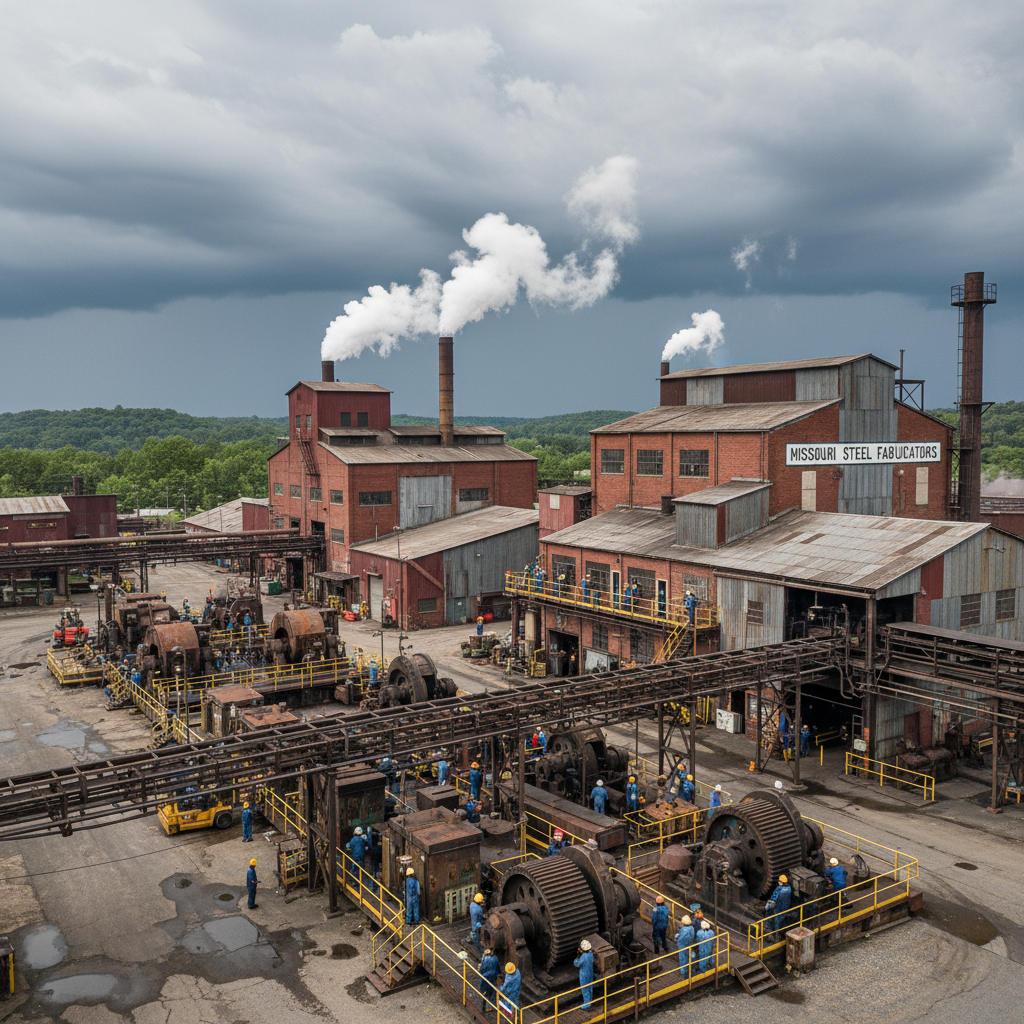
Missouri’s manufacturing base, its economic backbone, is funded by borrowing to purchase new equipment, plant expansion, and employee training. Major manufacturers in the automobile, electronics, and industrial machinery sectors have facilities in the state.
Impact on Capital Investment: Unconscionable borrowing expenses would raise the price of adding new facilities or new equipment for Missouri producers. For example, the auto manufacturers in the Kansas City and St. Louis areas, who are high-paying employers, might postpone constructing new factories or automation modernization if borrowing becomes too expensive.
Slowed Business Expansion: Smaller firms, particularly those with limited access to capital, would be unable to fund expansion initiatives, and thus productivity and employment levels within the production sector would be lower.
2. Agriculture: Monetary Burden on Farmers
Agriculture is a strong component of the Missouri economy, and one of America’s leading producers of soybeans, corn, and livestock is Missouri. Farmers in Missouri do borrow to purchase equipment, pay for planting seasons, and cover operating costs. With the Federal Reserve estimating high-interest rates to be high for a long span of time, Missouri farmers will find it increasingly difficult to obtain low-cost credit.
Impact on Operating Loans: Higher borrowing expenses would complicate farmers’ borrowing to acquire new equipment or financing cash flows for planting. So, some farmers would decide to delay purchases, lowering their output and long-run growth.
Commodity Price Pressures: Persistent movements in farm commodity prices and more costly financing can curb farm earnings. Farmers could be compelled to accept higher operating costs, potentially affecting food prices in Missouri and elsewhere.
3. Real Estate Market: Lower Growth and Higher Mortgage Rates
Missouri’s real estate market, particularly in urban areas like St. Louis and Kansas City, has been experiencing rapid growth in recent years. However, with the Federal Reserve’s forecast indicating that interest rates will stay elevated longer than expected, the real estate market may cool down, especially in terms of housing demand and property development.
Higher Mortgage Interest Rates: If borrowing costs increase, prospective house buyers can wait to purchase houses or purchase houses with smaller sizes. Increased mortgage interest rates may lead to lower affordability by first-time home buyers, therefore lowering demand in the housing property market.
Weaker Growth of Trade: Office, mall, and factory buildings making up commercial business property may similarly suffer from the adverse impact. Property developers would face an issue when they borrow money to construct new buildings, particularly in an environment where financing is costly to obtain.
4. Consumer Spending: Adjustments Amid Economic Uncertainty
Missouri consumers already dealing with the increasing cost of living due to inflation can now look forward to even tighter budgets with the new Federal Reserve outlook.
Low Consumer Confidence: Consumer expenditure may be affected as consumers and households reduce expenditure in expectation of higher interest rates. Low consumer confidence may result in a fall in discretionary expenditure, which is vital for retail firms across the state.
Car Sales: The Missouri auto market may also be impacted by the Federal Reserve’s perspective. Increased interest rates would make it more expensive to borrow money to purchase cars, which may lead to fewer car sales. This would have a direct impact on local auto dealerships and companies that depend on good consumer demand to generate automobile sales.
5. Financial Services: Impact on Credit and Investments
The Missouri banking sector, which includes banks, credit unions, and investment houses, will be impacted in a combination way by the Federal Reserve forecast. Banks make greater margins on profit from loans and credit products when interest rates rise, but they might be threatened by subpar loan demand and reduced consumer’ borrowing.
Mortgage and Personal Loan Market: Banks can experience a decline in mortgage origination volumes as interest rates rise. Demand for personal loans and credit cards may also fall as individuals cut back on spending.
Investment Strategy Realignment: Missouri investors would also need to adjust their strategy by increasing interest rates. Although there might be winners of increased interest rates in certain industries, others would expect reduced growth and, hence, rebalance investments.
Conclusion
Missouri is preparing itself for reduced growth rates in 2025 as the state aligns itself with the revised interest rate forecast of the Federal Reserve. As higher borrowing expenses weigh in, citizens and business groups alike shall navigate gingerly into the economy of the recession fostered by the Fed. Manufacturers, agricultural businesses, housing construction, and the banking institutions shall immediately be forced to cope with the total weight of projected rising rates. These would ease Missouri’s turnaround but for the very strength and pliability which, nevertheless, will be vital considerations in Missouri’s triumph at facing the hurricane.