- calendar_today August 14, 2025
Missouri’s real estate market in 2025 is showing steady momentum amid a cooling national economy. While interest rates are stabilizing, investor sentiment remains cautious following years of inflation and borrowing cost hikes. Across urban hubs and growing suburbs, Missouri developers and investors are shifting focus toward long-term income, regional affordability, and tenant stability.
So where are the best opportunities in Missouri this year? From St. Louis to Kansas City to Columbia, seven real estate sectors are demonstrating resilience and smart adaptability to shifting market forces.
Multifamily Housing: The Reliable Performer
Multifamily housing remains one of Missouri’s most consistent investment plays. In cities like Kansas City, St. Louis, and Columbia, high mortgage rates are keeping renters in apartments longer. Class B and C buildings—especially in neighborhoods like Midtown KC, The Grove in St. Louis, and East Campus in Columbia—are experiencing low vacancy rates and modest rent growth.
Investors are targeting mid-rise developments and build-to-rent communities near university districts and job centers. With annual rent growth around 2.5% to 3.5% in many areas and relatively low operating costs, multifamily assets are delivering dependable cash flow.
Industrial Properties: Still a Growth Engine
Missouri’s central location and strong transportation infrastructure are fueling demand for industrial properties. The I-70 corridor, including distribution hubs in St. Peters, Independence, and Springfield, has seen robust growth in warehousing and logistics.
According to JLL’s Midwest market report, industrial rents in Missouri increased by 6.2% year-over-year, while vacancy rates remained under 5% in key submarkets. With continued expansion of e-commerce, manufacturing, and cold storage, Missouri’s industrial sector is attracting attention from REITs and private equity alike.
Single-Family Rentals in Suburban Markets
Single-family rentals (SFRs) are gaining popularity in Missouri suburbs, where families seek affordability and space without long-term ownership. Towns around Kansas City—such as Lee’s Summit, Liberty, and Blue Springs—as well as suburbs of St. Louis like O’Fallon and St. Charles, are hotspots for SFR investment.
Roofstock’s 2025 Investor Sentiment Index points to Missouri as a rising star in SFR demand, particularly in markets with good schools and low property taxes. These homes see fewer vacancies and consistent rent appreciation, offering strong cash-on-cash returns for landlords.
Migration Trends: Regional Affordability Advantage
Missouri is benefiting from an affordability migration trend. As living costs rise on the coasts, mid-sized cities like Springfield, Columbia, and Jefferson City are attracting remote workers, students, and retirees alike. These cities offer lower housing costs, strong healthcare systems, and growing local economies.
Even in legacy industrial areas like Joplin and Cape Girardeau, economic revitalization efforts and infrastructure improvements are drawing fresh interest from real estate developers. Missouri’s low cost of living and business-friendly policies continue to support demand across sectors.
Mixed-Use Developments & Urban Revival
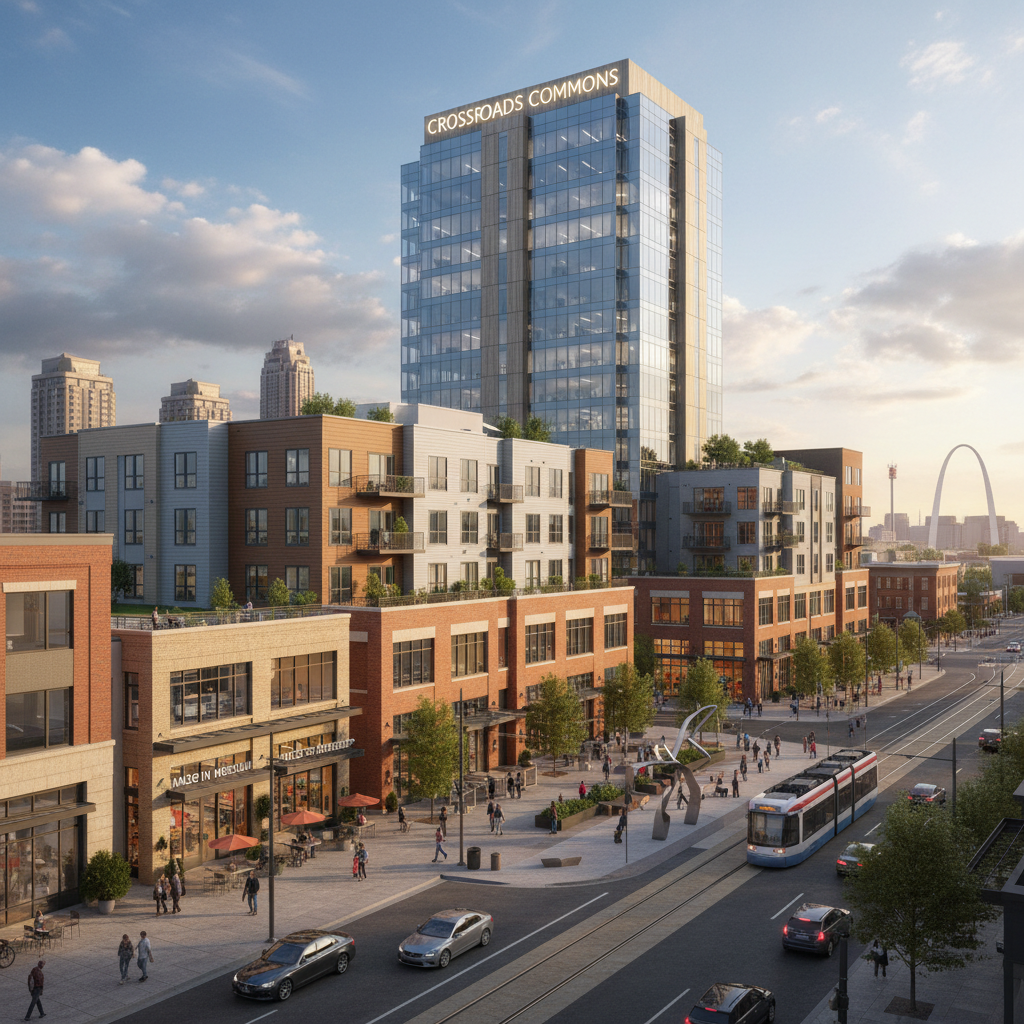
Downtown revitalization is underway in cities like Kansas City, St. Louis, and Springfield. Mixed-use projects that combine residential units with office, retail, and entertainment are breathing new life into urban districts. Kansas City’s Crossroads Arts District and downtown St. Louis are examples of where walkable, amenity-rich development is paying off.
While construction costs and zoning can present challenges, demand for walkable neighborhoods with live-work-play features remains strong—especially among young professionals and students.
Niche Assets on the Rise: Senior & Student Housing
Missouri’s senior housing sector is seeing renewed growth in suburban and rural areas, particularly near Springfield, St. Joseph, and Columbia. With the aging population increasing, demand for memory care, assisted living, and independent senior communities is expanding.
Student housing is another high-performing niche, especially in Columbia (University of Missouri), Springfield (Missouri State), and Rolla (Missouri S&T). Pre-leasing rates in these college towns remain above 90%, and developers are responding with upgraded, Wi-Fi-enabled, furnished housing designed to meet student preferences.
Risk Factors and Investment Cautions
Like all markets, Missouri presents localized risks. Flooding concerns persist along river-adjacent regions such as St. Charles and Cape Girardeau, driving up insurance costs. Additionally, aging infrastructure in older buildings across the state means renovation and maintenance costs must be budgeted accurately.
While Missouri is relatively regulation-light compared to coastal states, developers in urban cores must navigate city-specific zoning and permit processes. Interest rates—though flattening—remain elevated, placing pressure on financing for new developments and value-add strategies.
Expert Insight: What the Analysts Say
“Missouri offers strong fundamentals—reasonable land costs, solid infrastructure, and high rental demand,” says Lauren Bellingham, senior economist at CBRE. “The key is understanding local economic drivers, from university expansion to regional healthcare systems.”
Redfin’s 2025 Housing Trends report highlights Missouri as a stable and affordable investment region, with demographic shifts and job growth in healthcare, logistics, and education playing major roles in supporting real estate.
Strategic Diversification is Key in 2025
Missouri’s strongest real estate strategies this year involve sector and regional diversification. Multifamily properties continue to offer steady income. Industrial investments are thriving along transportation corridors. Single-family rentals are seeing rising demand in suburbs and smaller cities.
Mixed-use developments are revitalizing downtown areas, while niche sectors like student and senior housing benefit from demographic alignment. Investors who pair regional insight with strategic flexibility are best positioned to outperform.
In 2025, Missouri remains a land of balanced opportunity—where stability, affordability, and localized planning pave the way for long-term real estate success.