- calendar_today August 6, 2025
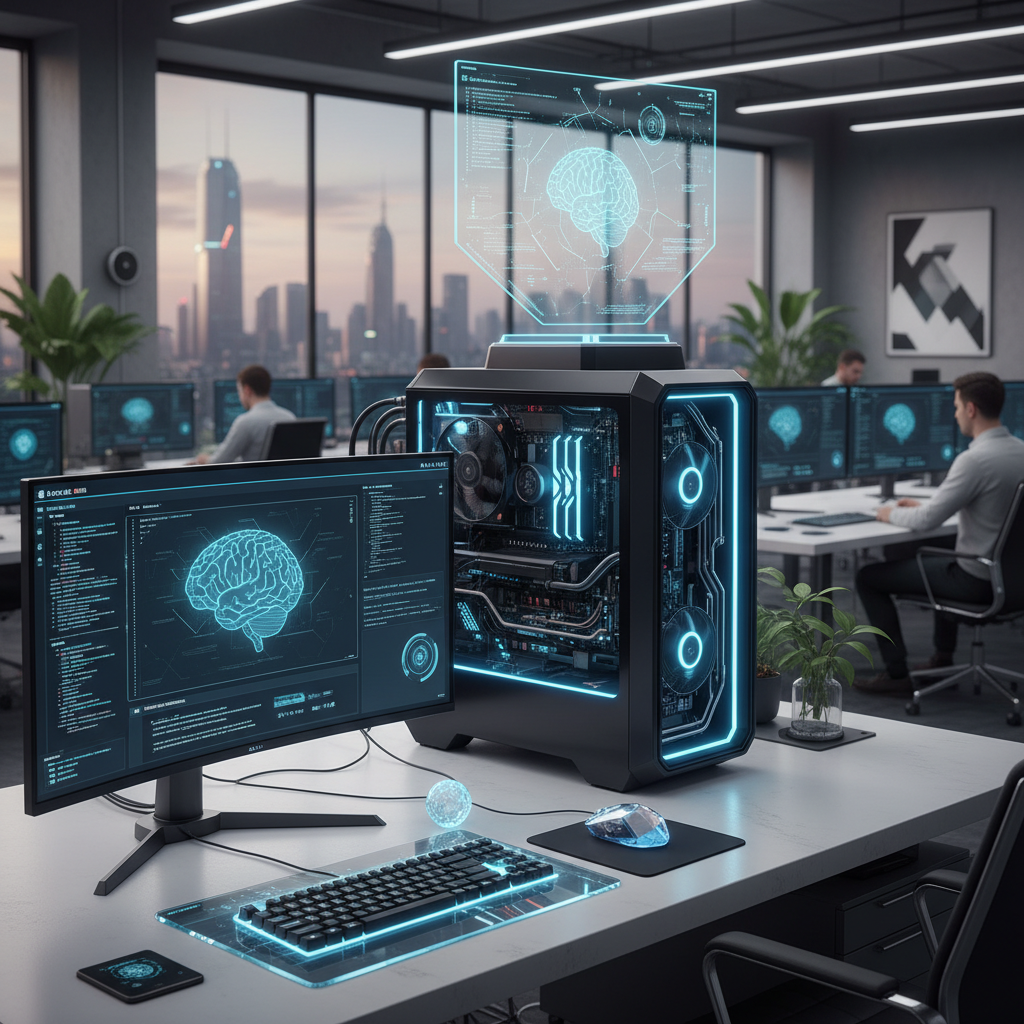
Nvidia has brought about a groundbreaking change in desktop computing through its launch of DGX Spark and DGX Station which operate as “personal AI supercomputers.” CEO Jensen Huang announced during the Nvidia GTX keynote that developers, researchers, and data scientists would gain access to powerful AI tools directly from their desktops in a new computing era. Researchers and developers can now locally prototype and execute large AI models with these systems which also allow for fine-tuning and stand as major progress for personal AI development.
The Grace Blackwell Platform: The Foundation of AI Innovation
The groundbreaking Grace Blackwell platform serves as the fundamental technology behind the DGX series. This architecture design targets the heavy computational requirements of current neural network systems. Traditional PC design principles have been abandoned in favor of a novel computer class purpose-built for AI-native applications. AI has completely transformed all levels of the computing stack according to Huang’s analysis. AI-native software development requirements will lead to the creation of a specialized computer class designed for AI-native developers and applications.
Two Tiers of Power: DGX Spark and DGX Station Specifications
DGX Spark: Compact and Powerful. The DGX Spark serves as the more compact system powered by the GB10 Grace Blackwell Superchip. Users can process AI workloads at an exceptional rate of 1,000 trillion operations per second with this chip which features a Blackwell GPU together with fifth-generation Tensor Cores. Users benefit from remarkable speed and efficiency when executing complex AI tasks due to this superior performance level.
DGX Station: Ultimate Performance for Advanced Applications. The DGX Station provides users who need superior computing power with the GB300 Grace Blackwell Ultra Desktop Superchip. This system includes an enormous 784GB of coherent memory and the ConnectX-8 SuperNIC that delivers maximum networking speeds up to 800Gb/s. The system setup provides peak performance for intensive AI applications while supporting advanced research and development activities.
Seamless Workflow: The Bridge System Advantage
The DGX systems were initially introduced under the name “Project DIGITS” and they go beyond traditional desktop capabilities. These systems operate independently as AI development labs which allow AI models to migrate effortlessly from local environments to DGX Cloud or other AI cloud platforms needing only minor code changes. The “bridge system” functionality enhances developer efficiency through streamlined AI development processes that increase flexibility.
Collaborative Manufacturing and Market Availability: Expanding Access
The DGX architecture functions as a blueprint which enables major PC manufacturers to create their own versions. The tech giants Asus, Dell, HP and Lenovo have pledged to create and market DGX systems. BOXX together with Lambda and Supermicro will produce the DGX Station. The collaborative method adopted provides extended access options and multiple configurations to meet all user requirements.
Pricing and Availability: Democratizing AI Supercomputing
Nvidia remains silent on the final pricing of units because multiple manufacturers produce them but has stated before that a basic DGX Spark-like computer would be priced at approximately $3,000. The DGX systems’ competitive pricing together with their powerful performance capabilities positions them as a desirable choice for professionals who want to progress AI development. The opening of DGX Spark reservations indicates that this powerful tool is now immediately available for booking. The DGX Station is designed to deliver superior performance and is anticipated to launch later in the year 2025. Nvidia’s DGX desktop series enables widespread access to AI supercomputing and provides new innovators with the opportunity to influence artificial intelligence’s future.