- calendar_today August 17, 2025
In what was billed as a press conference on the United States-European Union trade deal, the former U.S. president Donald Trump instead found time for a typical divergence on the topic of renewable energy. “They kill the birds. They drive the whales loco,” he said of wind turbines, later adding, “Birds, fish, no problem. People, not good.”
The remarks were typical Trump: designed to be overblown, unsubtle, and televisual, landing in a discourse that is more low-brow conspiracy than polite dissent. They were notable but hardly newsworthy, a blip on the screen of ongoing skepticism toward renewables in some quarters, and before that, opposition to their public funding.
At the same time, many of Trump’s most inflammatory comments hark back to an old trope among conspiracy theorists: that wind turbines are actually “windmills.” The former president was one of the first high-profile conservatives to deploy that particular turn of phrase, a brief he adopted from friends and followers in the Fox News right-wing echo chamber.
Yet his comments also reflect a much longer trend: one that has not just taken root in the U.S. but within conspiracy theories around the world, some of which have been around for years or even decades.
In a sense, such fears are a modern expression of an older fear: that one’s established way of life is under threat, or that new technology could be used to undermine one’s independence, values, or freedom. The historian Jeffrey Moe describes the 19th-century moral panic around telephones spreading disease and madness in much the same terms.
The deeper history of wind turbine opposition
In fact, analysis by the independent market analyst ClearView Energy Partners showed that opposition to wind turbines had slowly but steadily grown over a decade and a half leading up to Trump’s inauguration, and it predated his presidency by a long shot.
The issue with these deeper fears, research has shown, is that they tend not to be addressed by presenting facts or corrections. As several studies have confirmed, they are strongly tied to one’s general belief system, and they are rarely, if ever, changed by having them disproved.
To those working in the business or trying to persuade governments to decarbonize quickly, that’s a challenge.
The rise of anti-wind conspiracies
While the science of climate change has been clear at least since the 1950s that there is a significant risk of long-term, relatively rapid environmental change, much of the early debate around renewables focused on how they could be used to break the stranglehold of fossil fuel companies over the market.
A well-known example is The Simpsons episode that showed the power-hungry Mr. Burns, a fossil fuel baron, building a tower that blocks the sun so as to force the people of Springfield to buy his nuclear power instead. The joke was that any serious attempt to move to clean energy would be forestalled by fossil fuel interests in the real world.
In fact, fossil fuel interests were aware of such concerns. As early as 2004, then–Australian Prime Minister John Howard set up a panel of fossil fuel industry executives under the name Low Emissions Technology Advisory Group, with a clear mandate to slow the growth of renewables and maintain the dominance of fossil fuels.
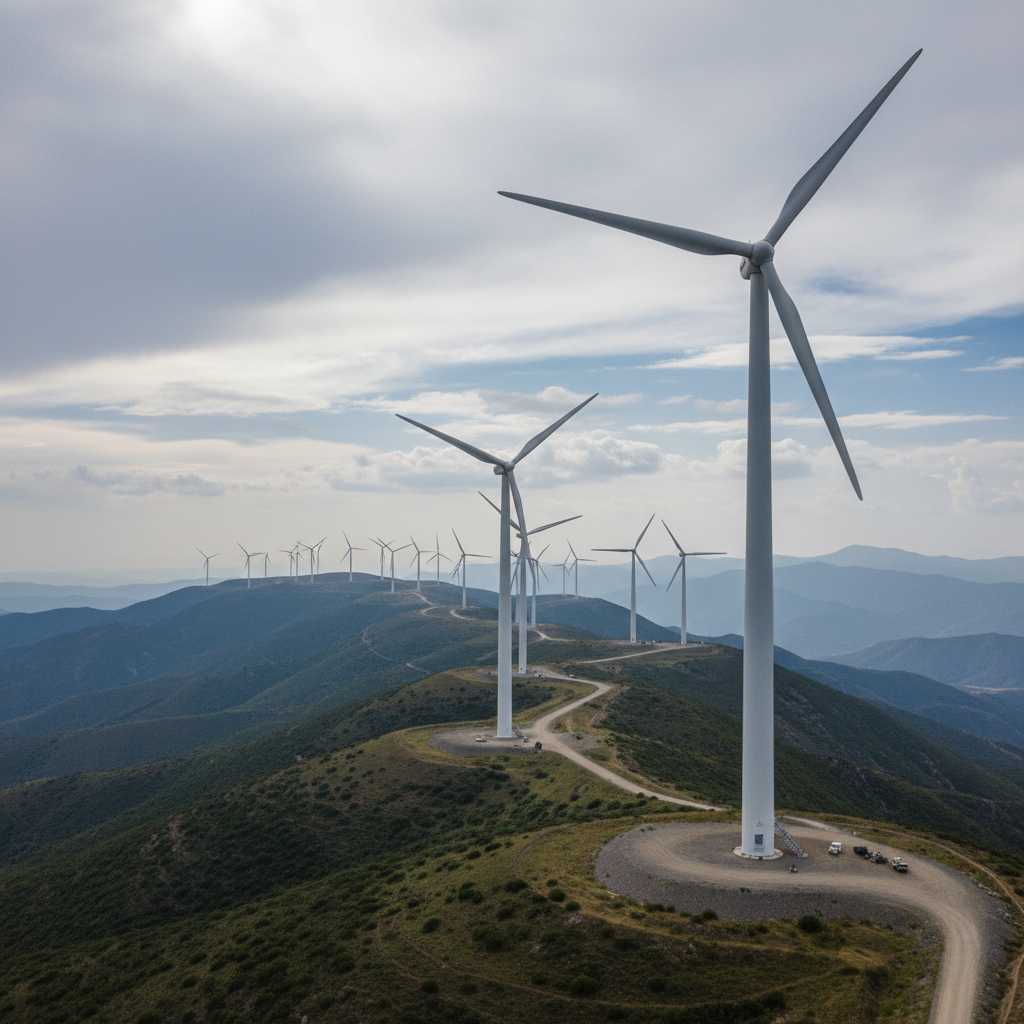
Anti-wind sentiment also followed the completion and commissioning of the first large-scale wind farms. Although many of these sources can be placed a significant distance from urban areas, they are also often placed on ridgelines or open plains, where they can be readily visible. That makes them an easy target for critique, conspiracy theories, and outright lies.
Online communities spread various conspiracy theories on the matter, including the so-called “wind turbine syndrome,” which alleges a host of illnesses among people living near wind turbines. The claims were picked up and amplified by public health “experts” who had a long track record of spreading false or misleading information, such as Joseph Mercola, Marcia Angell, and Donald W. Klotz, among others. The World Health Organization eventually debunked “wind turbine syndrome” as a “non-disease.”
Yet data and academic research from the same period suggest that such conspiracies are less likely to be found in certain demographic groups or among those with a low level of education. Instead, the strongest predictor of wind turbine opposition is one’s general tendency toward conspiratorial beliefs, regardless of one’s age, gender, educational background, or political orientation.
One 2011 study led by Kevin Winter from Germany’s University of Leipzig found a link between opposition to wind turbines and the tendency to endorse other conspiracy theories, such as “climate change is a hoax” and “the government is hiding the truth about UFOs.”
Wind turbines might seem more overtly political than a television series or a mobile phone, and they do at times become explicitly so in the public debate. But at their heart, the symbolism of wind farms remains the same, with turbines coming to represent, on the one side, progress and the march toward a better future and, on the other, government overreach and a loss of control.
For some fossil fuel opponents, Trump’s comments echo a litany of similar claims. But beneath the easy soundbites and memes is an interesting subtext: that, at heart, the issue is about power and identity.