- calendar_today September 1, 2025
Honda is known for making cars and motorcycles. It doesn’t normally launch rockets into space. But that’s changing. This week, the company’s research and development arm revealed it successfully launched and landed a reusable rocket. It’s the first time the company has achieved such a feat, marking a big leap for Honda in its new direction.
This isn’t some launchpad in a foreign country, either. The rocket lifted off from Honda’s very own site in Taiki Town, Japan. The town is increasingly becoming one of Japan’s most prominent centers for space research. And Honda’s research, in particular, is quickly becoming one of the country’s most interesting experiments.
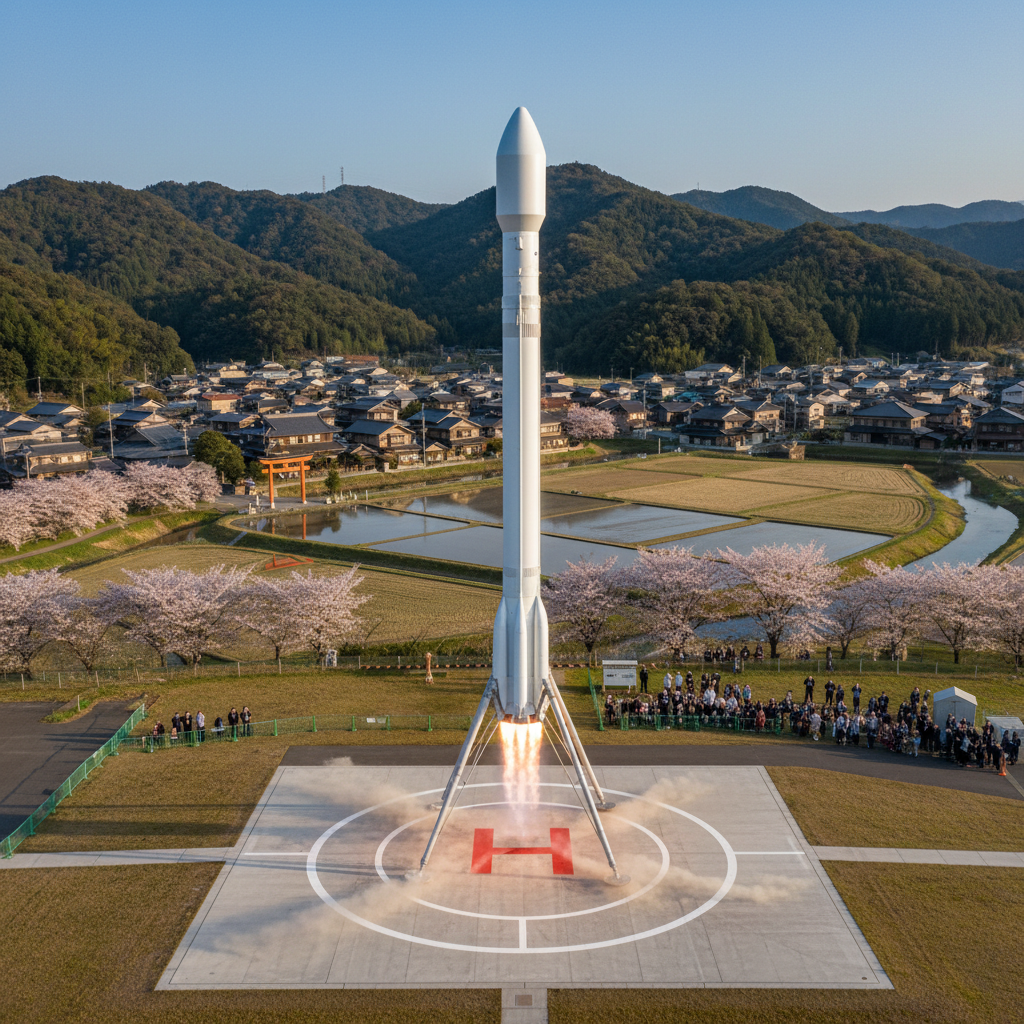
During the launch, the rocket soared 890 feet (270 meters) into the air before touching back down just 37 centimeters away from its target. That wasn’t happenstance. That was precision engineering.
This rocket is a roughly 21-foot (6.4-meter) tall beast weighing over 2,800 pounds (1,259 kilograms) at launch. The vehicle flew for 56.6 seconds, just enough time to make a stable landing and be within 0.15 miles (0.24 kilometers) of the designated landing area.
It’s an incredible achievement for a company whose forte has always been creating ground-based transport vehicles. But the test proved that this is more than just an idea — it’s hardware capable of spaceflight.
Cars to Spacecraft
It’s not just some vague idea for a different direction. The company has been looking at space for a while. In late 2021, Honda revealed it would pursue research into space technology. It was quiet about most of its progress since then, but this week’s successful test shows it’s more than just tinkering.
Instead of building an entirely new industry from the ground up, Honda has been leveraging its existing expertise in manufacturing and robotics technology. For example, its automated driving capabilities play a key role in this rocket program. Honda doesn’t need to use the same technologies for a self-driving car. But it needs the same precision control for taking off vertically, flying stably, and landing on target.
It’s a multi-discipline idea that’s paid off so far — so far, at least.
It’s not just a feat to show off technical prowess. Honda wants to build a space industry. With the proliferation of small satellites and satellite-based services, having an upper hand in accessing the upper atmosphere will become increasingly valuable.
This rocket is still in early research and development stages. The company isn’t planning to build an entire ecosystem from the ground up. But the successful test suggests that its objectives go far beyond earthbound transport.
Honda wants to build its own spaceflight hardware. It sees a future in which it can produce small-scale launch vehicles to support the increasing demand for satellite launches — and possibly tie that to its automotive, robotics, and communication expertise.
Aiming for Suborbital Flight
The company aims to fly its rocket into suborbital space by 2029. It means reaching altitudes beyond 62 miles (100 kilometers) above sea level. These are suborbital flights that exceed the Earth’s atmosphere but don’t remain in orbit. Just getting past that threshold is a technical challenge in itself.
Reaching that goal would prove Honda can build propulsion, control, and landing systems that can propel it toward bigger and better launches. But putting a satellite into orbit requires more than flying above Earth. It would need to develop new launch vehicles, guidance systems, and even payload technology to be viable.
It’s not yet clear if that’s Honda’s next step. It hasn’t decided if its rocket program will become a commercial business. But the test has placed it in a position where that decision isn’t far off.
It’s not an accident that the launch site is in Taiki Town. The municipality is one of Japan’s up-and-coming aerospace hubs. It’s been building up infrastructure, private-sector partnerships, and JAXA research in the area. It’s established facilities, support systems, and training programs to help make it a hub for experimentation.
Honda is joining the increasing list of companies conducting live tests there. The region has established itself as one of Japan’s leading centers for space research.
It’s still a long way off. Honda is going head-to-head with big guns like SpaceX and Blue Origin, companies with massive budgets and years of orbital experience. But what Honda brings is a different set of capabilities. It has expertise in manufacturing efficiency, robotics, and mobility technology that could be a major advantage as it advances.
It’s not just an experiment. This week’s test wasn’t a one-off test. It was a signal that Honda is setting its sights on a world far beyond Earth’s surface.