- calendar_today August 18, 2025
Nvidia, a name synonymous with cutting-edge graphics technology, is now venturing into an intriguing new domain: Nvidia integrates artificial intelligence directly into video games. Nvidia’s high-performance AI-accelerating GPUs serve mainly to produce breathtaking visual effects, but the company has introduced its experimental G-Assist AI system.
Harmonizing Hardware: AI Control Over Gaming Ecosystem Peripherals
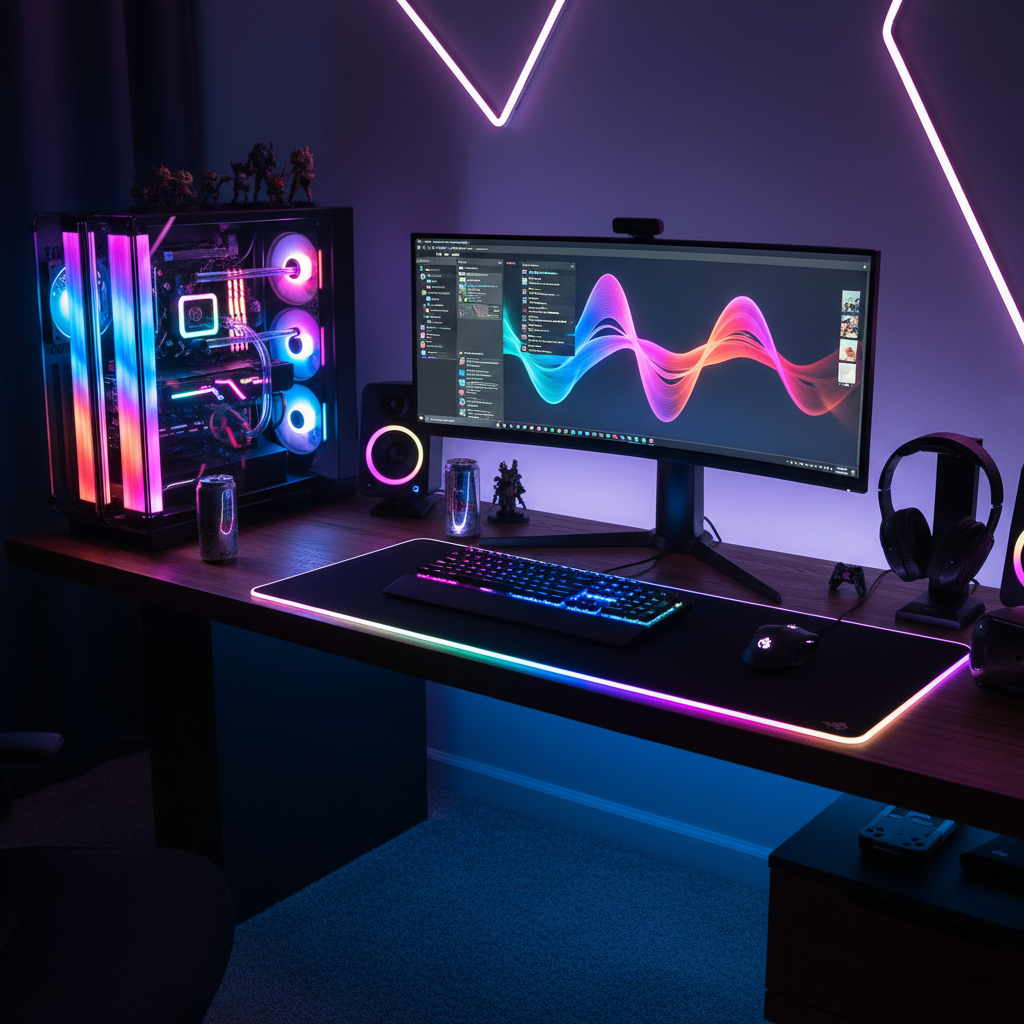
Nvidia has expanded G-Assist functionality by enabling strong third-party plug-in compatibility. Nvidia’s G-Assist AI system can establish direct communication connections with multiple gaming peripherals from reputable brands, including Logitech G, Corsair, MSI, and Nanoleaf. The integration of these technologies creates an exciting variety of options for building a cohesive and sophisticated gaming ecosystem.
The potential exists to command MSI motherboards to adapt their cooling profiles in real-time according to the thermal requirements of the game currently running, while Logitech G devices can be programmed to match their RGB lighting patterns with in-game occurrences for enhanced immersion and interaction. The AI’s capacity to coordinate various hardware components marks an important milestone in creating a smarter and more unified PC gaming experience.
Nvidia focuses on highlighting desktop system AI processing abilities because of the growing interest in AI laptop integration in the personal computer market. Nvidia launched the ChatRTX application, which offers broader application capabilities, just as contemporary AI tools depend heavily on cloud-based computational resources. The G-Assist application targets gamers by providing solutions that match their unique hardware requirements because their systems already include powerful GPUs as essential gaming components.
G-Assist runs on a compact and refined language model (SLM), which enables direct execution on the end user’s hardware for efficient performance. Users can install the base text software with 3GB of storage space, but will need a total of 6.5GB if they choose to add voice control functionality.
G-Assist requires users to have a GeForce RTX 30, 40, or 50 series GPU with a minimum of 12GB of dedicated video memory to operate. The performance level of G-Assist scales based on the processing ability of the host GPU because better graphics cards enable the AI assistant to operate much faster and more smoothly. The development team intends to add laptop GPU support in future updates, even though the existing performance features of numerous mobile GPUs could restrict G-Assist’s effectiveness in laptop-based gaming systems.
The choice to execute G-Assist on the GPU locally presents immediate challenges despite its long-term benefits of better user data privacy and quicker response times. The process of initiating AI model interaction during internal tests with a mid-range RTX 4070 graphics card produced a noticeable boost in GPU utilization.
Language model response generation requires computational resources, which directly affect other simultaneous tasks, especially graphically intensive video games. Testing showcased a 20% frame rate decrease in Baldur’s Gate 3 at maximum visual settings whenever G-Assist was actively processing data.
The implementation of G-Assist might intensify current performance limitations for systems that are already stretched to their capacity while running demanding games. G-Assist functions much faster and more responsively when running non-graphically intensive programs, but to prevent noticeable performance drops, users should use a strong, high-end GPU for continuous regular operation.
The experimental status of G-Assist shows itself through its occasional slow response times and various software bugs. The traditional method of optimizing performance through manual system and game setting adjustments continues to offer reliable and time-saving results for most users. G-Assist stands out as an innovative early attempt to exploit the sophisticated artificial intelligence processing power embedded in current gaming PCs.
The continuous fast-paced improvements in GPU technology make it more feasible to run both resource-intensive games and advanced AI models simultaneously. Nvidia’s G-Assist currently functions as a compelling yet unfinished demonstration of how artificial intelligence will shape future gaming experiences by showing that GPUs might both create stunning virtual environments and work alongside players to manage gaming systems.